
LEARN CENTER GUIDE #7
How Water Chemistry Protects Your Hot Tub
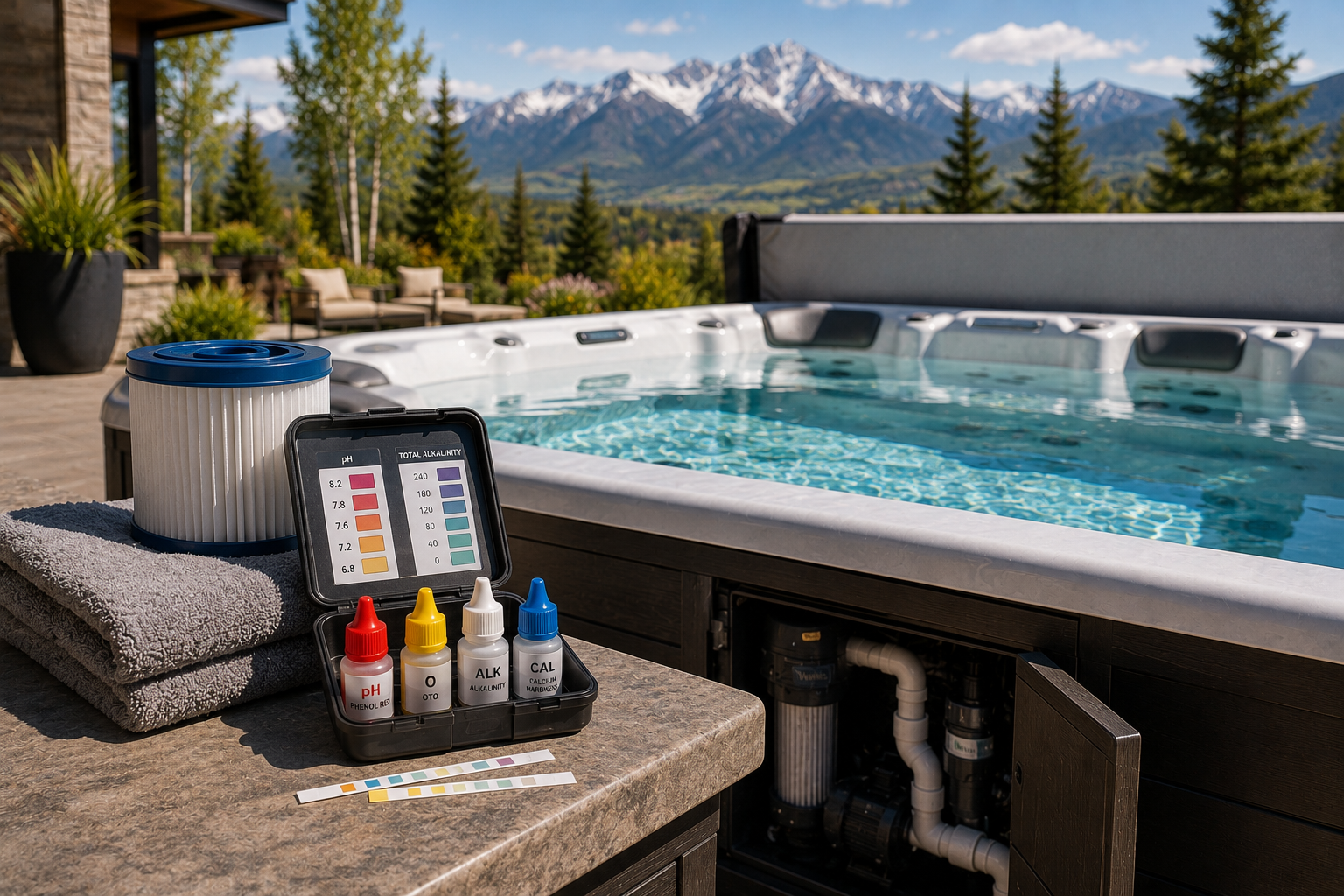
Balanced water does much more than keep your spa looking clean. It helps protect heaters, pumps, plumbing, seals, filters, and the complete system behind every relaxing soak.
Most people do not buy a hot tub because they are interested in learning water chemistry.
They buy one because they want to relax after work, spend time with family, or enjoy a quiet evening under the Colorado sky. The last thing they expect is to spend weekends testing water, adjusting pH, shocking the spa, and wondering why the numbers still do not look right.
For many homeowners, water chemistry becomes the most frustrating part of ownership. It is one of the biggest reasons people become discouraged with their hot tub.
The irony is that water chemistry is not trying to make ownership difficult.
It is trying to protect your hot tub.
Your Hot Tub Is More Than a Tub of Water
From the outside, a hot tub looks simple.
Lift the cover, step in, relax.
Underneath that shell, however, is an entire mechanical system. Pumps circulate hundreds of gallons of water through heaters, plumbing manifolds, control valves, sensors, and filters every day. Every one of those components depends on balanced water to operate the way it was designed.
When the water stays balanced, the entire system stays healthier.
When it does not, every component begins working under less-than-ideal conditions.
Water Is Constantly Changing
One of the biggest misconceptions in hot tub ownership is believing that once the water is balanced, the hard part is over.
In reality, the water begins changing the moment someone gets in.
Every soak adds sweat, body oils, dead skin cells, lotions, sunscreen, cosmetics, hair products, and other organic contaminants. Your sanitizer immediately begins disinfecting bacteria while oxidizing many of those contaminants.
Every chemical reaction changes the water slightly, and every new bather adds another layer for the sanitizer to manage.
The water never stays the same.
That is why water chemistry is not something you set once and forget.
When Water Chemistry Stops Being Fun
Every new hot tub owner starts with good intentions.
They buy test strips, sanitizer, pH increaser, pH decreaser, shock, filter cleaner, and everything else the dealer recommends. For a while, it feels manageable.
Then life happens.
Maybe the family has friends over for the weekend. Maybe the hot tub gets heavy use during the holidays. Maybe work gets busy and testing the water slips for a week or two.
Suddenly the sanitizer disappears faster than expected, the pH will not stay balanced, and the water never quite feels as clean as it used to.
That is when many homeowners begin chasing the water instead of enjoying the hot tub. Understanding why hot tub chemicals seem to stop working can help explain what is really happening.
Water Protects More Than Your Soak
Most people assume balanced water is simply about keeping the water clear.
It is actually protecting thousands of dollars' worth of equipment.
Water that is too acidic can become corrosive over time, potentially shortening the life of heaters, seals, metal components, and other parts throughout the system.
Water that is too high in pH or calcium can begin leaving scale deposits inside plumbing and on heater elements, reducing efficiency and forcing equipment to work harder.
Neither problem usually appears overnight.
They develop gradually, often long before a homeowner notices anything has changed.
Your Heater Notices Before You Do
One of the first components affected by poor water chemistry is often the heater.
Even a thin layer of calcium scale acts like insulation. Heat cannot transfer into the water as efficiently, so the heater runs longer to maintain temperature.
That increases energy consumption while placing additional stress on one of the most expensive components in the spa.
The water still feels warm.
The heater is simply working much harder to get there.
Every Maintenance Task Supports the Next
One thing experienced hot tub owners eventually learn is that no maintenance task stands alone.
Clean filters improve circulation. Good circulation helps sanitizer reach every part of the system. Proper sanitizer slows organic buildup.
Regular drain-and-refill service removes worn-out water before chemistry becomes difficult to manage. Plumbing purges help remove biofilm hiding inside the pipes.
Each task makes the next one easier.
When one of those steps gets postponed, the others have to work harder to compensate. That is why water chemistry often feels frustrating. The problem usually is not one thing. It is several small maintenance tasks gradually falling out of rhythm.
Good Water Chemistry Saves Time
Ironically, many homeowners spend more time trying to fix bad water than they would have spent maintaining good water.
Once water becomes cloudy, foamy, difficult to balance, or starts consuming sanitizer unusually fast, it is easy to fall into a cycle of adding more products, testing more often, and chasing numbers that never seem to stay where they belong.
At that point, the water has become the project.
The goal of good water chemistry is to keep it from ever reaching that stage.
Good Water Care Protects Your Investment
A hot tub is one of the largest recreational purchases many homeowners make.
Protecting that investment is not just about keeping the cabinet clean or replacing filters when they wear out. It starts with the water itself.
Balanced water helps protect heaters, pumps, plumbing, acrylic surfaces, seals, and every component that makes your spa comfortable and reliable.
It also makes ownership far more enjoyable.
Because when the water behaves the way it is supposed to, you spend less time troubleshooting and more time soaking.
The Bottom Line
Water chemistry has a reputation for being the most frustrating part of hot tub ownership, and it is easy to understand why. The water is constantly changing, every soak introduces new contaminants, and several maintenance tasks have to work together to keep the system healthy.
The good news is that water chemistry is not about chasing perfect numbers.
It is about consistency.
Balanced water protects your equipment, helps your sanitizer work efficiently, reduces scale and corrosion, and makes every other part of hot tub ownership easier.
When the water is cared for consistently, your hot tub becomes what it was always meant to be: a place to unwind instead of another weekend project.

Why Clear Water Isn't Always Healthy Water
Learn why appearances can be deceiving and why healthy hot tub water depends on more than clarity alone.
Explore Guide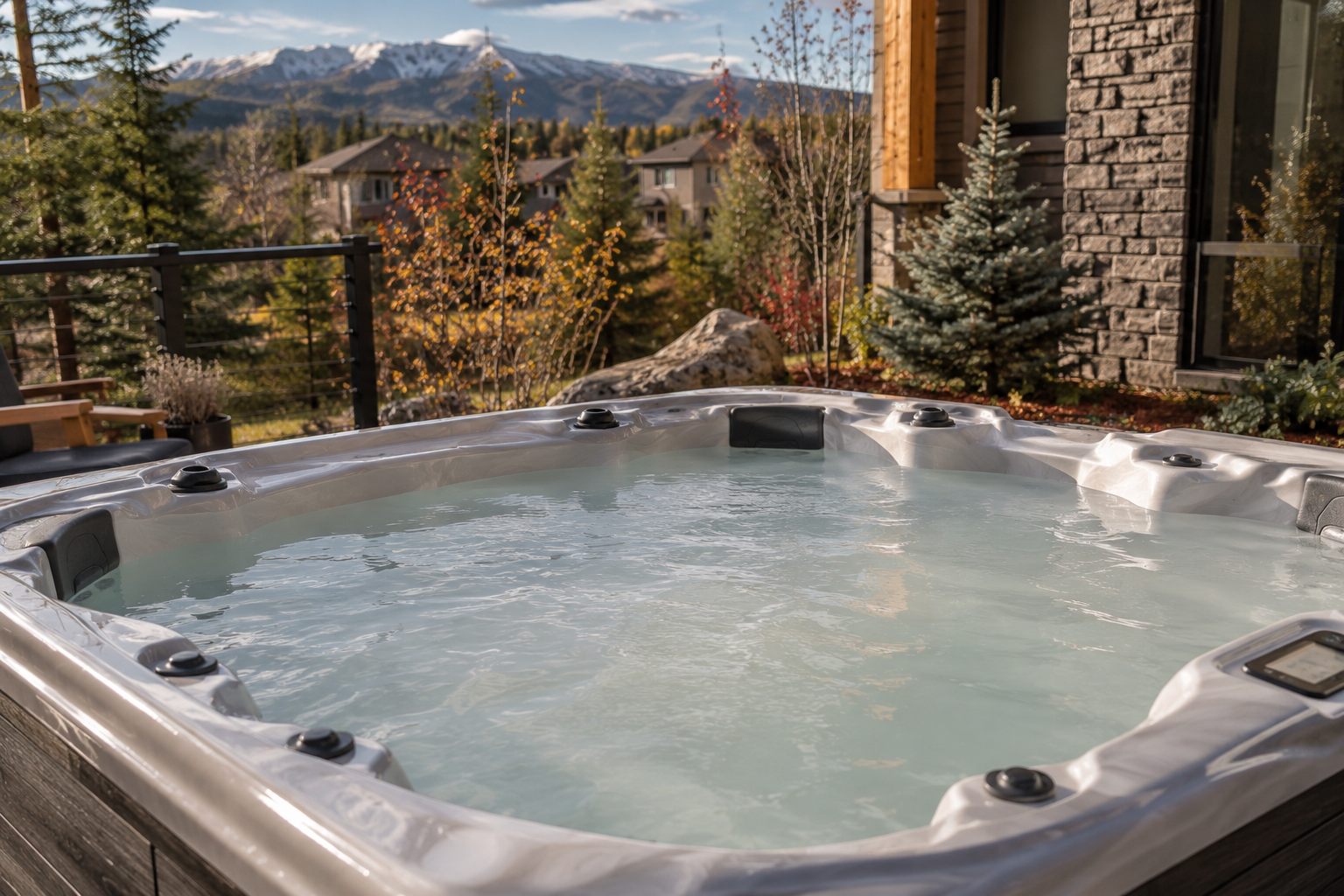
What Causes Cloudy Hot Tub Water?
Discover what cloudy water reveals and why solving it usually requires more than one simple fix.
Explore Guide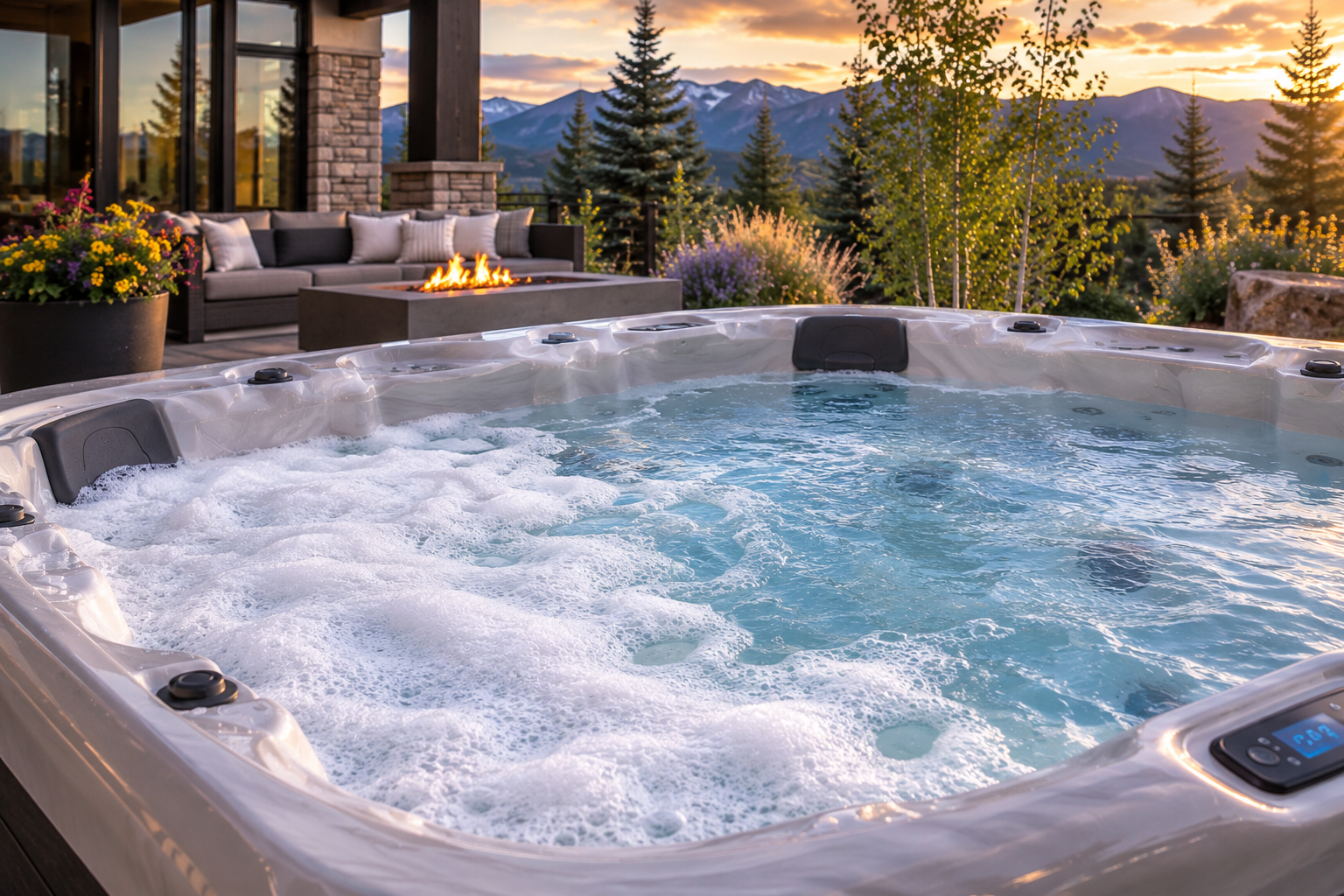
Why Does My Hot Tub Water Foam?
Learn what foam reveals about your water and why the same issue keeps returning if the underlying cause is never addressed.
Explore Guide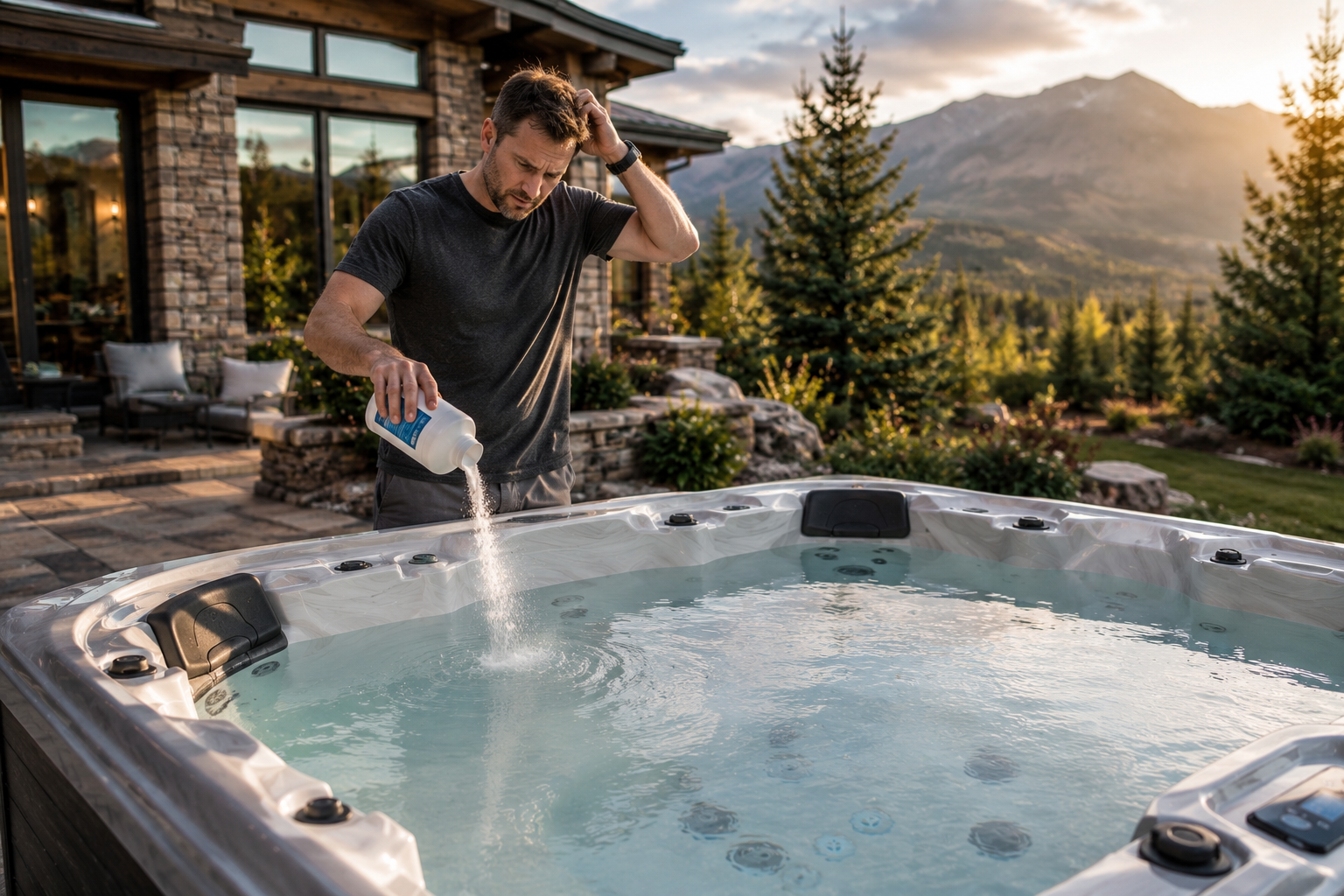
Why Do My Hot Tub Chemicals Stop Working?
Understand how aging water and accumulated contaminants can make fresh chemicals seem ineffective.
Explore Guide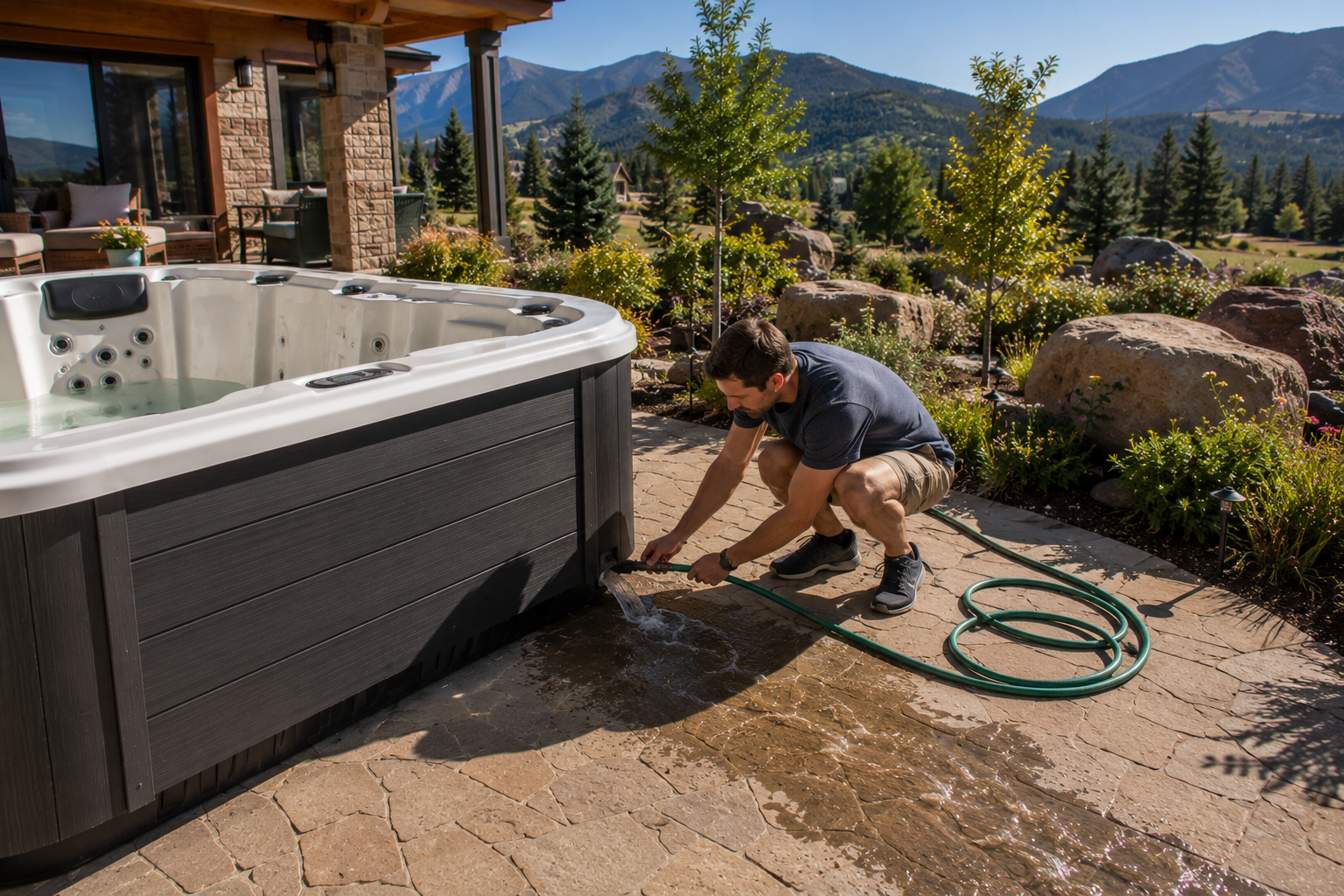
When Should You Drain & Refill Your Hot Tub?
See why fresh water, clean filters, and a plumbing purge create a true system reset.
Explore Guide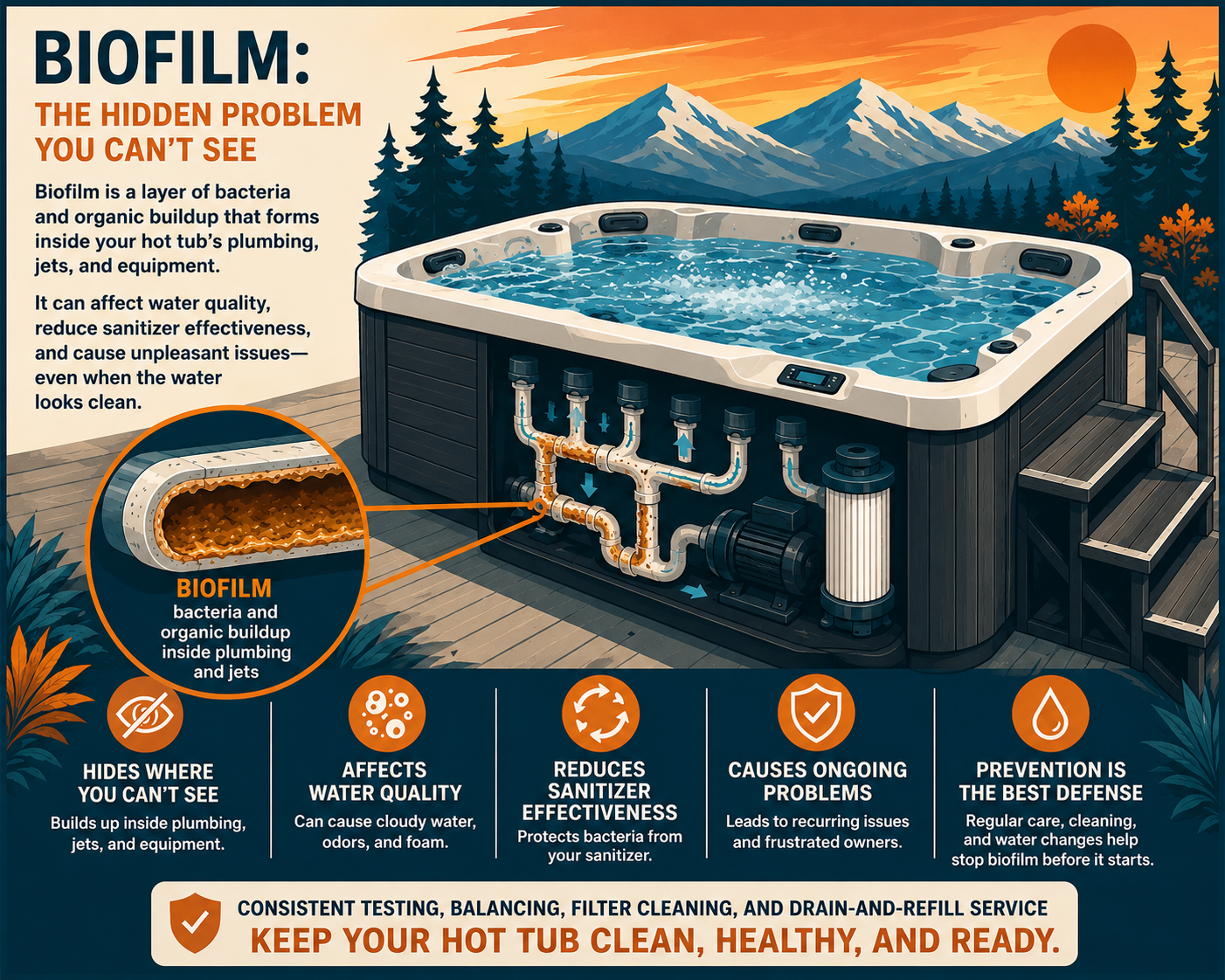
What Is Biofilm?
Learn how biofilm forms inside hot tub plumbing and why it matters even when the water appears perfectly clear.
Explore Guide