LEARN CENTER GUIDE #4
Why Do My Hot Tub Chemicals Stop Working?
If your hot tub chemicals don't seem to work anymore, the problem may not be the chemicals. Learn why water eventually reaches a point where balancing becomes difficult and what to do about it.
Almost every hot tub owner reaches the same frustrating moment.
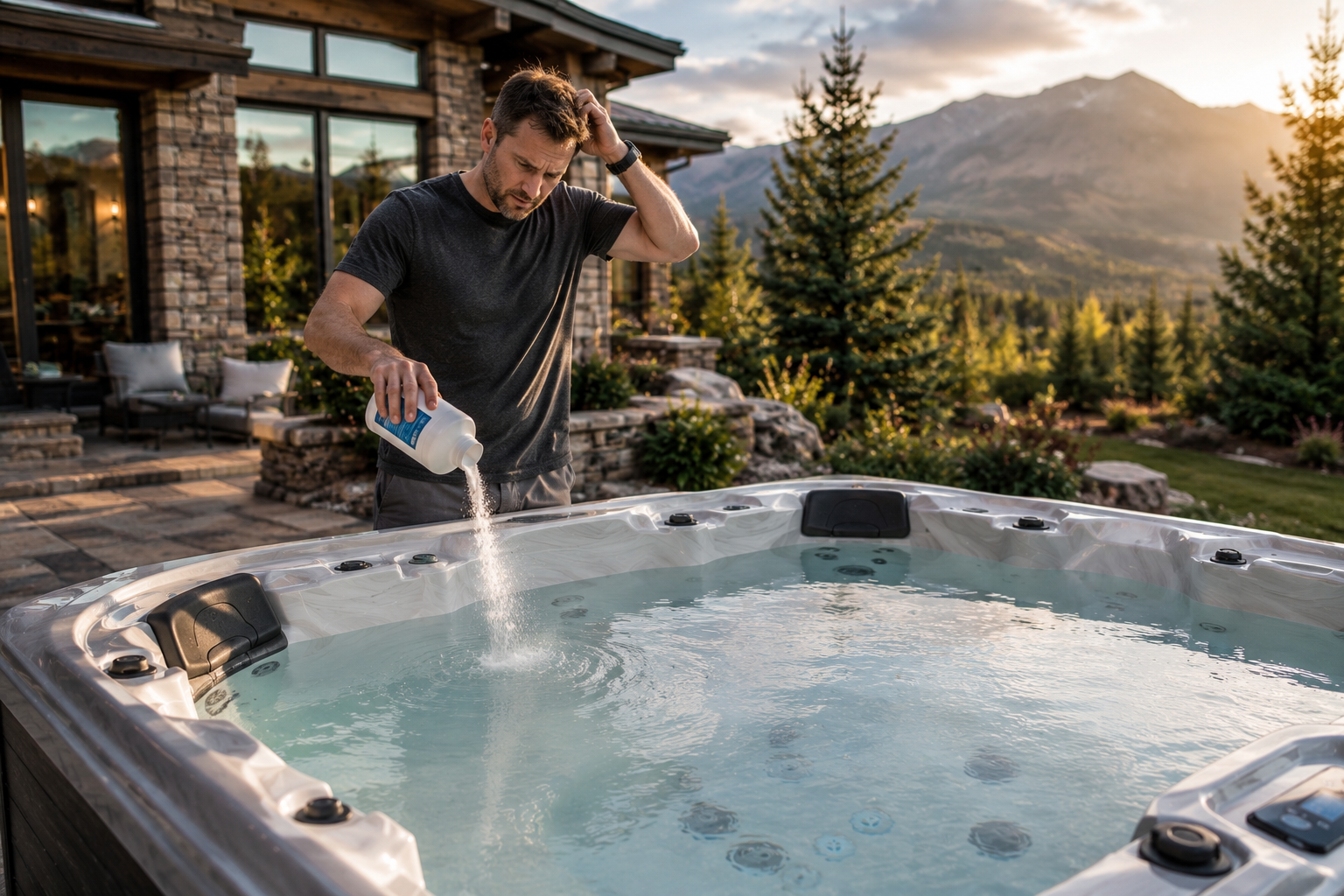
The water starts looking a little dull, so you add sanitizer. A day later, it still doesn't look right. You adjust the pH, shock the water, clean the filter, and test it again. Maybe things improve for a day or two, but before long you're standing over the spa wondering why none of your chemicals seem to be making a difference.
It's an easy conclusion to reach: the chemicals must not be working.
Most of the time, that's not what happened.
The Chemicals Didn't Change. The Water Did.
Hot tub chemicals don't suddenly become ineffective. Chlorine doesn't wake up one morning and decide to stop sanitizing water.
What changes is the environment those chemicals are working in.
Every time someone uses the spa, they leave behind sweat, body oils, dead skin cells, sunscreen, lotions, cosmetics, hair products, and other organic contaminants. Your sanitizer immediately gets to work breaking those materials down while also disinfecting bacteria and other microorganisms introduced during each soak.
Over time, however, the workload keeps growing. The water accumulates dissolved contaminants that don't simply disappear after being sanitized. As the water ages, your sanitizer has to spend more of its energy reacting to what's already there instead of protecting the water moving forward.
Eventually, you're asking fresh chemicals to solve months of accumulated chemistry.
More Chemicals Isn't Always the Answer
One of the most common DIY mistakes is assuming that if a little sanitizer is good, more sanitizer must be better.
That's understandable. If the water looks cloudy or starts developing an odor, adding chemicals feels like the logical next step.
Sometimes it helps.
Many times, it doesn't.
Older water often reaches a point where adding more sanitizer is like pouring coffee into an already full mug. The problem isn't the coffee. It's that there's no room left for it to do what it's supposed to do.
The same thing happens inside a hot tub. Once dissolved solids and organic contaminants become excessive, chemical efficiency begins to decline. Water becomes increasingly difficult to balance, sanitizer gets consumed more quickly, and small problems become recurring problems.
Water Doesn't Wear Out Overnight
This is one reason hot tub care can be deceptive.
The changes happen slowly.
One weekend, the water is perfect. A few weeks later, sanitizer seems to disappear faster than normal. Before long, you're adjusting pH more often, shocking the spa more frequently, and cleaning filters because the water never quite feels as clean as it used to.
None of those changes happen because of a single bad day.
They're usually the result of aging water gradually becoming harder to maintain.
That's why so many homeowners feel like the problems appeared "all at once," when in reality they've been building for weeks.
Sometimes the Problem Isn't the Water Alone
Even if you keep your water balanced, contaminants can remain elsewhere in the system.
Filters collect oils, debris, and fine particles that eventually reduce circulation if they aren't cleaned regularly. At the same time, biofilm can begin developing inside the plumbing, creating protected areas where bacteria and organic residue continue accumulating beyond the reach of normal sanitizer levels.
This is one reason persistent water problems can continue even after chemical readings look acceptable.
The water may be balanced.
The system isn't necessarily clean.
Good Water Care Is a System
Healthy hot tub water isn't created by one product.
It's the result of several maintenance tasks working together.
Water needs to be tested consistently. Sanitizer needs to stay within range. Filters need routine cleaning. Water eventually needs to be replaced. Plumbing should be purged before draining to remove biofilm, and fresh water needs to be balanced from the beginning.
When one part of that system gets delayed, the others begin working harder to compensate.
That's often why homeowners feel like they're chasing their water instead of enjoying their hot tub.
The Turning Point Most Owners Experience
Nearly every long-term hot tub owner has experienced it.
They've added chemicals.
They've shocked the water.
They've cleaned the filters.
They've tested everything twice.
Yet something still feels off.
That's usually the point where they discover the issue wasn't a missing chemical. It was that the water had reached the end of its useful life.
Once fresh water replaces old water, many of those frustrating problems become dramatically easier to manage because the sanitizer is no longer fighting months of accumulated contaminants.
Fresh Water Gives Your Chemicals a Chance
Hot tub chemicals are designed to maintain healthy water.
They're not designed to endlessly rescue worn-out water.
Keeping filters clean, replacing aging water on schedule, removing biofilm during drain-and-refill service, and maintaining consistent water chemistry all work together to reduce the workload on your sanitizer. When each part of the system is maintained, the chemicals can do exactly what they were designed to do.
That's why good water care rarely depends on using more products.
It depends on giving those products clean water to work with.
The Bottom Line
If your hot tub chemicals suddenly seem ineffective, don't assume the products are to blame.
More often than not, they're trying to overcome water that's carrying months of accumulated contaminants, dissolved solids, and organic waste. No amount of sanitizer can permanently solve a water-quality problem that's been building over time.
The best results come from treating your hot tub as a complete system. Clean filters, fresh water, properly maintained plumbing, and balanced chemistry all support one another. When those pieces work together, keeping your water clean becomes much simpler—and your hot tub becomes what it was meant to be: a place to relax, not another project waiting in the backyard.
Why Clear Water Isn't Always Healthy Water
Learn why appearances can be deceiving and why healthy hot tub water depends on more than clarity alone.
Explore Guide
What Causes Cloudy Hot Tub Water?
Discover what cloudy water reveals and why solving it usually requires more than one simple fix.
Explore Guide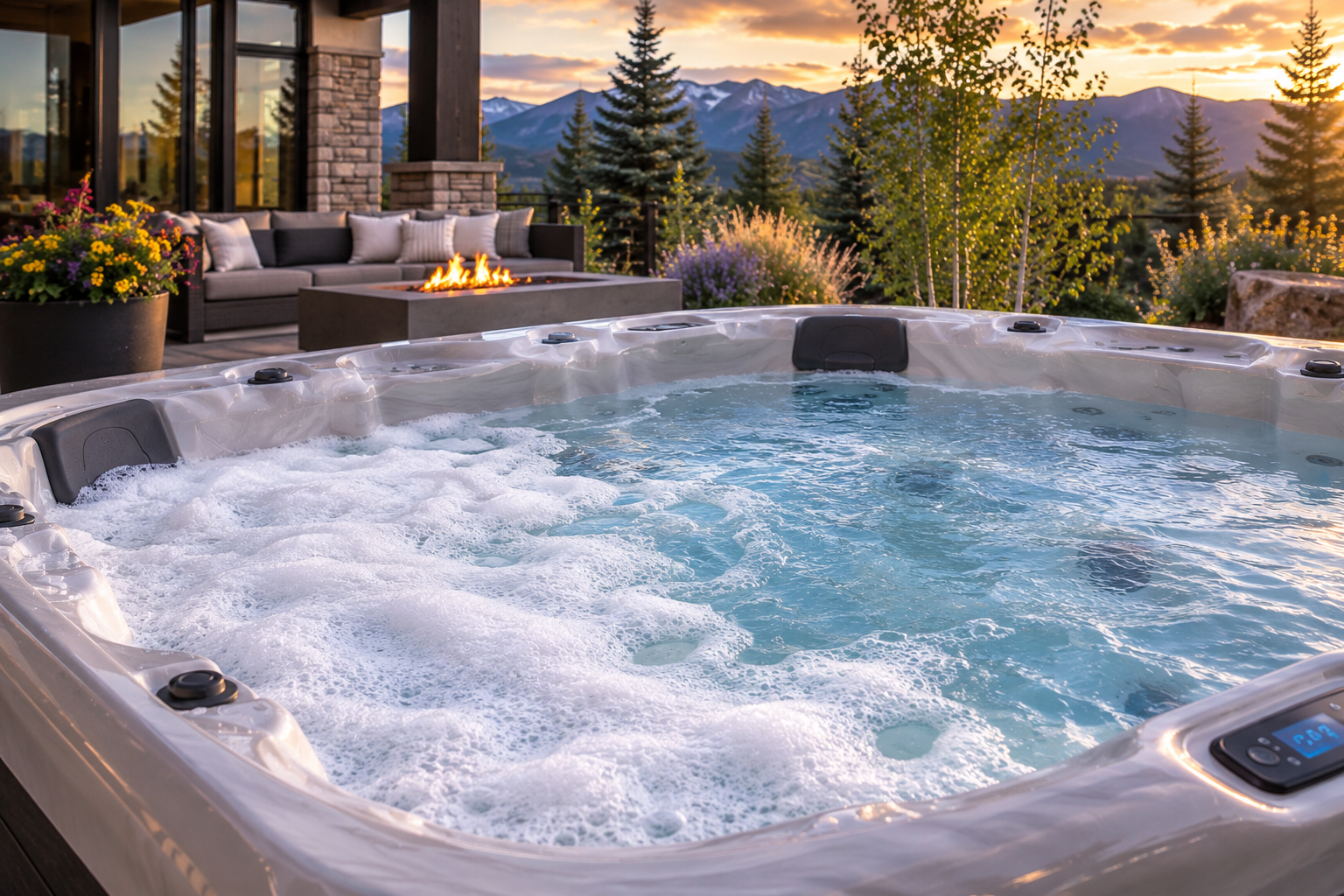
Why Does My Hot Tub Water Foam?
Learn what foam reveals about your water and why the same issue keeps returning if the underlying cause is never addressed.
Explore Guide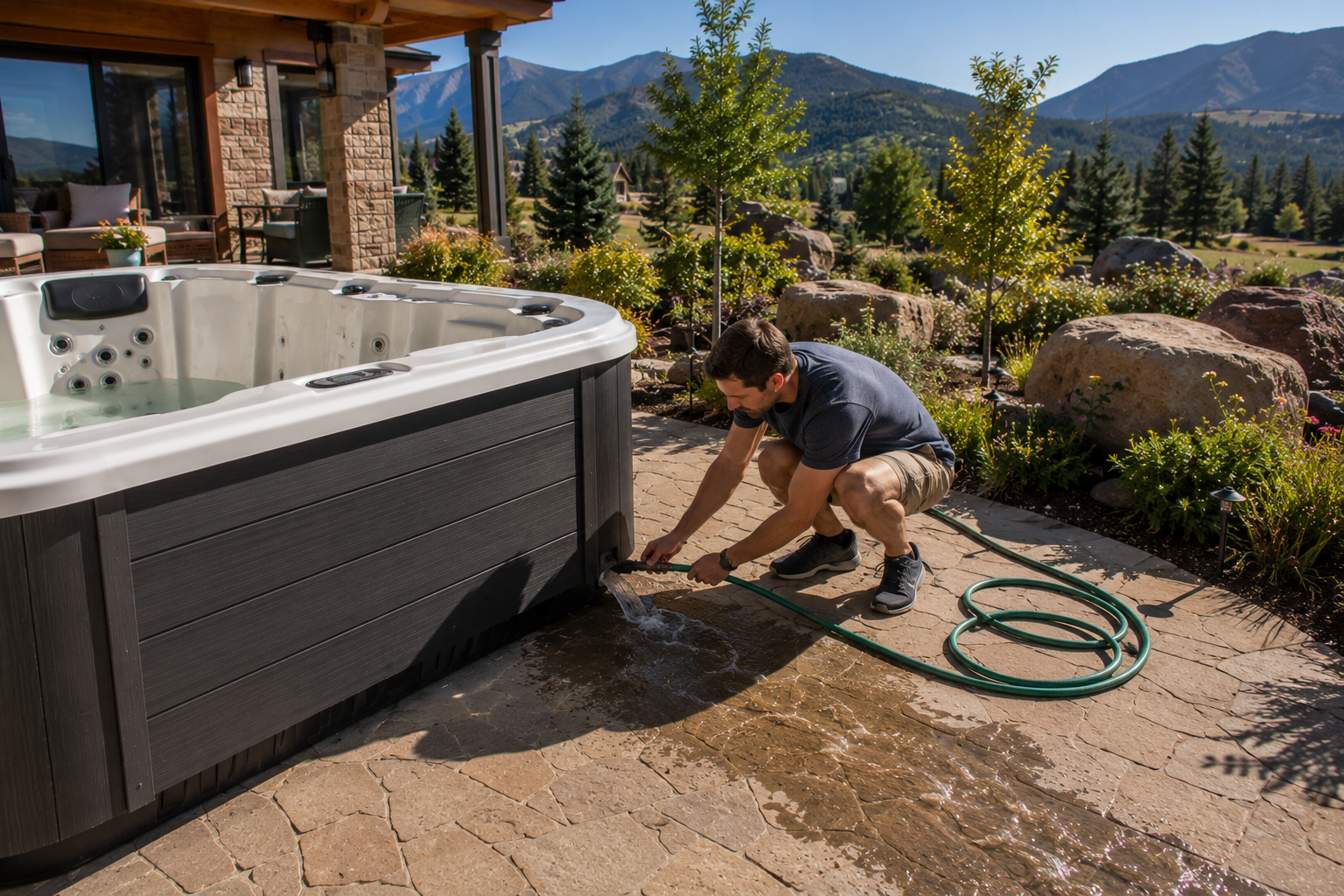
When Should You Drain & Refill Your Hot Tub?
Learn why draining and refilling every few months is essential, what happens when you do not, and why a proper water change is more than simply pulling the drain plug.
Explore Guide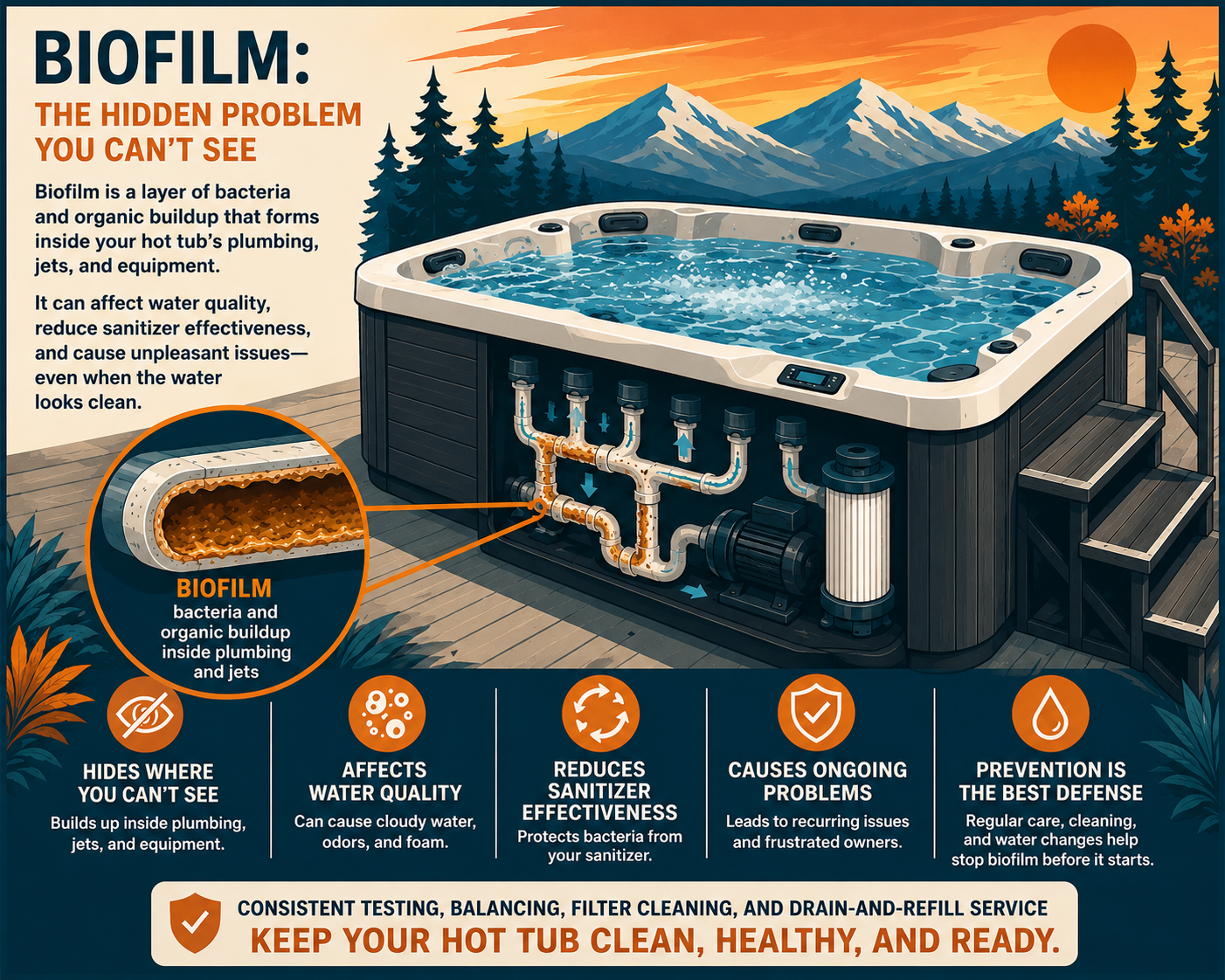
What Is Biofilm?
Learn how biofilm forms inside hot tub plumbing and why it matters even when the water appears perfectly clear.
Explore Guide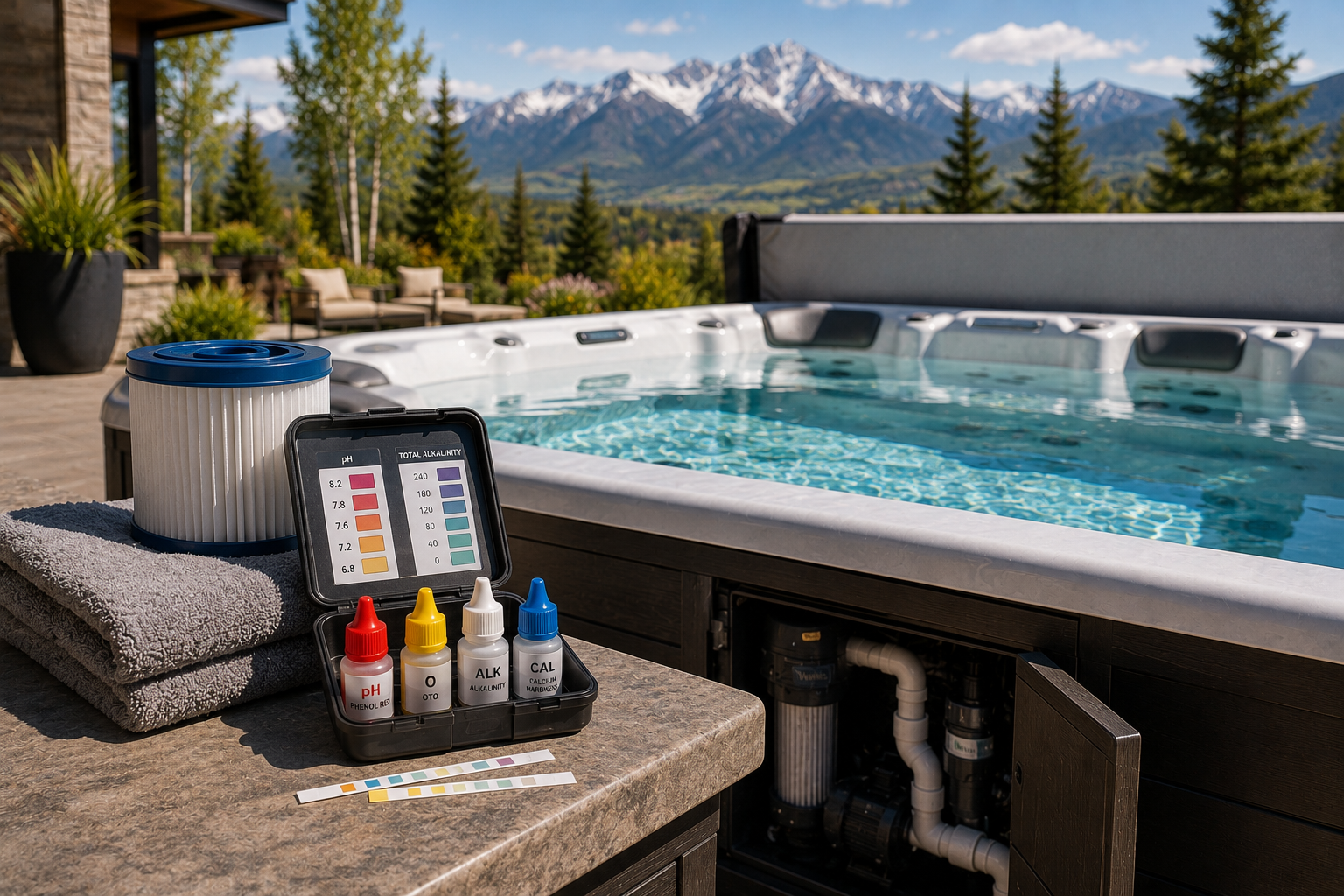
How Water Chemistry Protects Your Hot Tub
See how balanced water helps protect heaters, pumps, plumbing, seals, filters, and the complete spa system.
Explore Guide