
LEARN CENTER GUIDE #6
What Is Biofilm? The Hidden Problem Inside Your Hot Tub
Some of the most important parts of your hot tub are hidden inside its plumbing. Learn how biofilm forms, why sanitizer may not remove it, and why a proper purge matters.
When most people think about cleaning a hot tub, they picture the parts they can actually see.
They wipe down the shell, rinse the filters, test the water, and maybe shock the spa after a busy weekend. If the water looks clear, it feels like everything is under control.
The surprising part is that some of the most important parts of a hot tub are completely hidden.
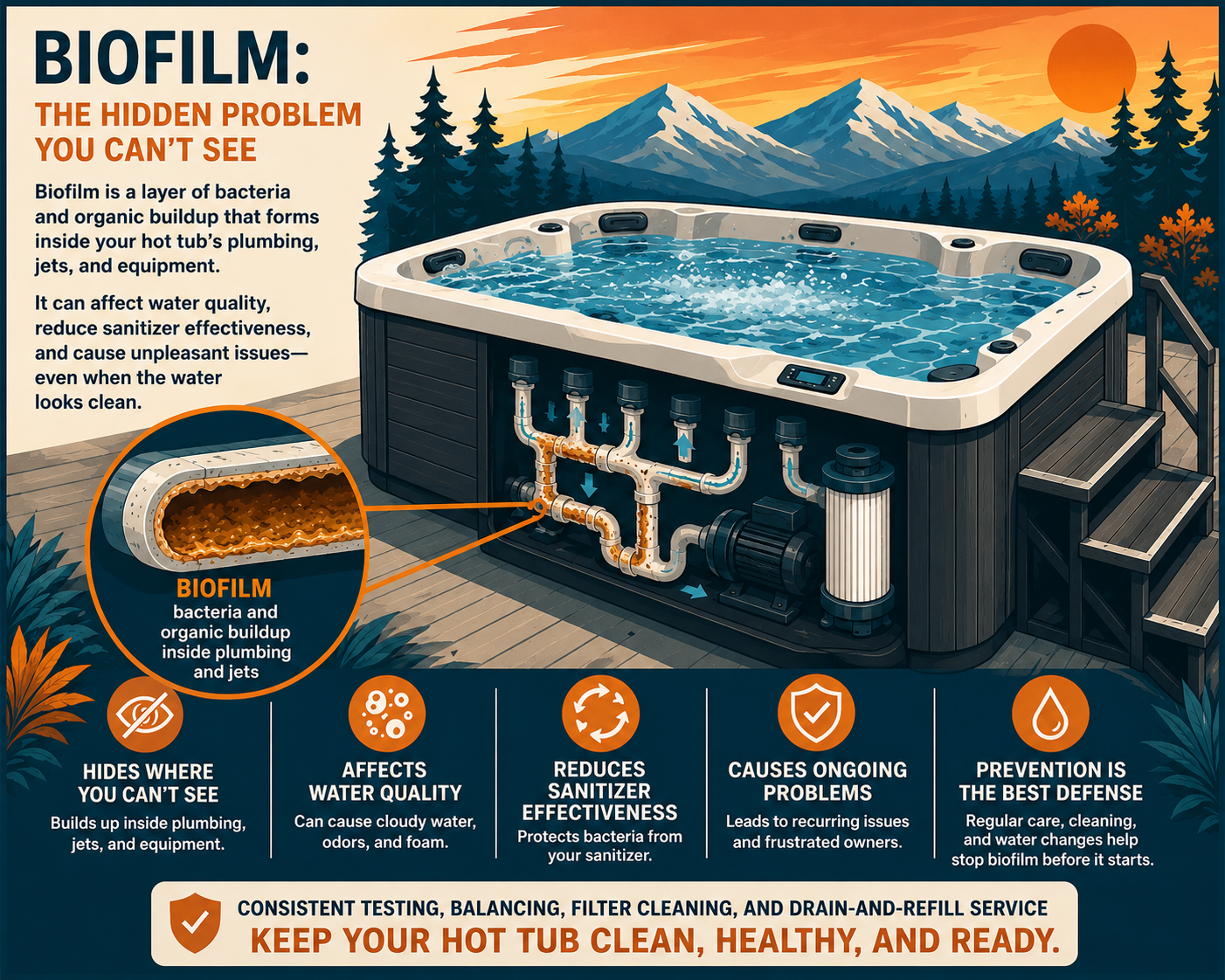
Behind the cabinet is a network of plumbing that circulates warm water through pumps, heaters, and dozens of feet of pipe. That plumbing stays warm, stays wet, and is constantly exposed to the same body oils, organic contaminants, and microscopic organisms that enter the water every time someone uses the spa.
Over time, those conditions can create something called biofilm.
Biofilm Isn't Just Bacteria
One of the biggest misconceptions is that biofilm is simply bacteria growing inside the pipes.
It is more complicated than that.
Biofilm is a sticky protective layer that microorganisms create so they can attach themselves to surfaces. Once that layer develops, it begins trapping bacteria, organic debris, oils, and other contaminants against the inside of the plumbing.
Think of it like plaque on your teeth.
Brushing your teeth removes plaque before it becomes a problem. If it stays there long enough, it hardens, protects bacteria underneath it, and becomes much more difficult to remove.
Biofilm behaves in much the same way inside a hot tub's plumbing.
Why Sanitizer Can't Always Remove It
Many homeowners assume that maintaining proper chlorine or bromine levels means nothing harmful can survive inside the spa.
Sanitizer is incredibly important, but biofilm changes the equation.
Once microorganisms are protected inside that sticky layer, the sanitizer flowing through the plumbing may not fully penetrate it. The outside of the biofilm is exposed to sanitizer, while organisms deeper inside can remain protected.
That does not mean your sanitizer is not working.
It means it is fighting a problem it was not designed to solve on its own. This is also one reason hot tub chemicals can appear to stop working.
The Water May Be Fresh. The Plumbing May Not Be.
This is where many DIY drain and refills fall short.
A homeowner drains the spa, rinses the shell, refills it with fresh water, balances the chemistry, and assumes they are starting over.
Unfortunately, draining the water does not completely empty the plumbing.
Water remains trapped throughout pumps, heaters, manifolds, and dozens of feet of pipe. If biofilm is already established inside those plumbing lines, much of it remains there after the drain and refill is complete.
Fresh water enters.
Old buildup stays behind.
That is why some homeowners are surprised when water problems return much sooner than expected.
This Is Why Plumbing Purges Matter
A plumbing purge is designed to clean the part of the hot tub you cannot see.
Before draining the spa, a purge product is circulated through the system while the pumps are running. The solution helps loosen biofilm, oils, and accumulated residue from the plumbing walls so those contaminants can be flushed out with the old water instead of remaining inside the system.
For many homeowners, it is the step they have never heard of.
Ironically, it is also one of the most important parts of a complete drain and refill.
Signs Biofilm May Be Contributing to Water Problems
Biofilm is not something you can see by looking into the water.
Instead, you notice the symptoms.
You may find yourself adding sanitizer more often than expected. Water may become cloudy shortly after balancing it. Foam returns even after shocking the spa. Odors develop more quickly than they used to, and keeping chemistry stable starts feeling like a constant battle.
None of those problems automatically mean biofilm is present.
They are, however, common reasons experienced water-care professionals recommend performing a plumbing purge before replacing the water.
Prevention Is Easier Than Correction
Like most maintenance, biofilm is much easier to manage before it becomes excessive.
Consistent sanitizer levels, regular filter cleaning, replacing aging water every three to four months, and performing a plumbing purge during drain-and-refill service all work together to reduce buildup inside the system.
Those steps do not just improve water quality.
They also reduce the amount of work your sanitizer has to do every single day.
Healthy Water Starts With a Clean System
One of the biggest lessons in hot tub ownership is that healthy water depends on much more than what you can measure with a test strip.
- Water chemistry matters.
- Filters matter.
- Fresh water matters.
- The plumbing matters, too.
When all of those pieces work together, maintaining crystal-clear, healthy water becomes much easier than constantly trying to solve recurring problems after they have already started.
The Bottom Line
Biofilm is one of the least visible parts of hot tub ownership, which is exactly why it is so often overlooked.
You cannot see it from the patio, and standard water tests will not tell you it is there. Yet it can make water harder to balance, increase sanitizer demand, and contribute to recurring water-quality issues that frustrate even attentive homeowners.
Understanding biofilm changes the way you think about caring for a hot tub. A proper drain and refill is not just about replacing old water. It is about cleaning the entire system so fresh water actually starts fresh.

Why Clear Water Isn't Always Healthy Water
Learn why appearances can be deceiving and why healthy hot tub water depends on more than clarity alone.
Explore Guide
What Causes Cloudy Hot Tub Water?
Discover what cloudy water reveals and why solving it usually requires more than one simple fix.
Explore Guide
Why Does My Hot Tub Water Foam?
Learn what foam reveals about your water and why the same issue keeps returning if the underlying cause is never addressed.
Explore Guide
Why Do My Hot Tub Chemicals Stop Working?
Understand how aging water and accumulated contaminants can make fresh chemicals seem ineffective.
Explore Guide
When Should You Drain & Refill Your Hot Tub?
See why fresh water, clean filters, and a plumbing purge create a true system reset.
Explore Guide
How Water Chemistry Protects Your Hot Tub
See how balanced water helps protect heaters, pumps, plumbing, seals, filters, and the complete spa system.
Explore Guide