
LEARN CENTER GUIDE #5
When Should You Drain & Refill Your Hot Tub?
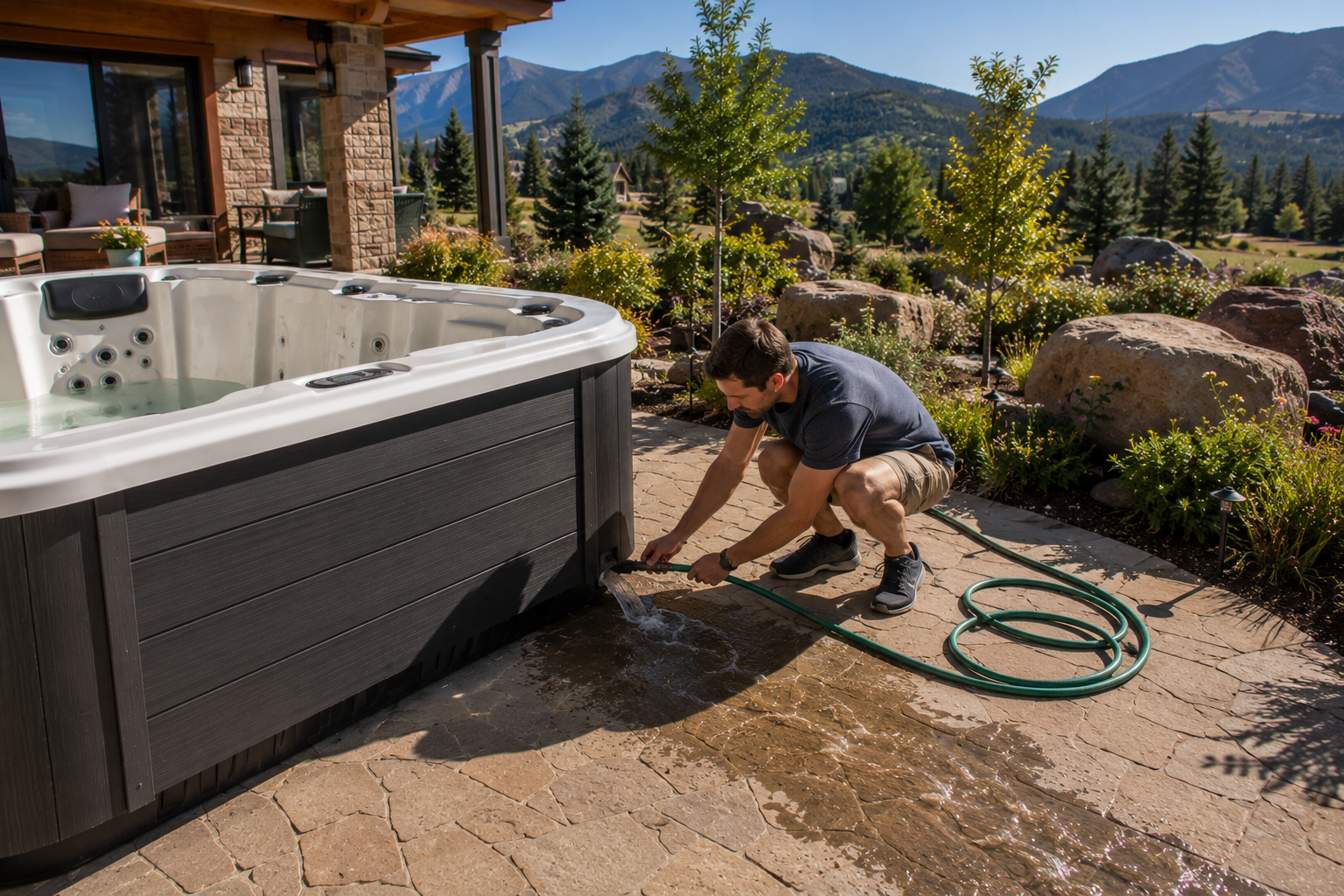
Changing hot tub water is easy to postpone, but water keeps aging even when it still looks clear. A proper drain and refill resets the water, plumbing, filters, and complete spa system.
Owning a hot tub comes with plenty of small maintenance tasks, but none are easier to postpone than changing the water.
Testing takes a few minutes. Adding sanitizer is simple. Cleaning the filter is not exactly exciting, but it does not take long. A complete drain and refill, on the other hand, usually turns into an afternoon project.
It means dragging out hoses, waiting for hundreds of gallons of water to empty, scrubbing the shell, cleaning the filters, refilling the spa, balancing fresh water, and waiting for it to heat back up before anyone can use it again.
It is no surprise that many homeowners keep pushing it to next weekend.
The problem is that water does not stop aging just because it still looks clear. That is one reason it helps to understand why clear water is not always healthy water.
Every Soak Leaves Something Behind
Most people think about hot tub water in terms of sanitizer. As long as chlorine or bromine is in range, the water must be fine.
That is only part of the story.
Every person who gets into a hot tub leaves behind body oils, sweat, dead skin cells, lotions, sunscreen, cosmetics, hair products, and small amounts of organic waste. That includes trace amounts of urine and microscopic fecal matter. It is not pleasant to think about, but it is simply part of using a shared body of warm water.
Your sanitizer is constantly working to oxidize and disinfect those contaminants, but it does not make them disappear. Many remain dissolved in the water, and with every soak, the total contaminant load continues to grow.
Eventually, you are no longer maintaining fresh water. You are trying to rescue old water.
Clear Water Can Still Be Worn Out
One of the biggest misconceptions in hot tub ownership is believing that clear water is healthy water.
Water can remain crystal clear long after it has become difficult to sanitize effectively.
As dissolved solids continue to build, your sanitizer has to work harder. Chemical demand increases. Water becomes more difficult to balance, and problems such as cloudy water, foam, and persistent odors become much more common.
This is why people often find themselves adding more and more chemicals without seeing better results.
The chemicals are not failing.
The water has simply reached the end of its useful life. Learn more about why hot tub chemicals can seem to stop working.
The Part Most Homeowners Never Think About
Draining the water is not actually the most important part of a drain and refill.
The plumbing is.
Inside every hot tub is a network of warm pipes that rarely dry out. Over time, those pipes can develop biofilm, a thin, sticky layer where bacteria and organic material attach themselves to the plumbing walls.
Biofilm helps protect bacteria from normal sanitizer levels, allowing contaminants to survive even after the water has been drained.
If you refill a spa without removing that buildup, you are introducing fresh water into a system that may still contain months of accumulated residue.
That is why many manufacturers and water-care professionals recommend using a plumbing purge product before draining the spa. The purge helps break loose biofilm hiding inside the plumbing so it can be flushed out instead of remaining behind for the next fill.
A Proper Water Change Is More Than Pulling the Drain Plug
A complete drain and refill is really a full system reset.
A thorough water change includes:
- Purge the plumbing before the water leaves the spa.
- Drain the hot tub completely.
- Clean the shell and wipe down the waterline.
- Deep-clean the filters or replace them if needed.
- Refill the spa with fresh water.
- Balance the new water and bring it back to temperature.
None of those steps are particularly difficult on their own.
Together, they become a project that many homeowners simply do not look forward to repeating every few months.
That is one of the biggest reasons water changes get delayed.
How Long Is Too Long?
Most hot tub manufacturers recommend replacing the water every three to four months, although the exact timing depends on the size of the spa, the number of people using it, and how consistently the water is maintained.
In practice, many homeowners stretch that schedule much longer. It is common to hear people admit they have gone six months or even a year because the water still looked fine or they did not have time to deal with it.
Unfortunately, water does not care about your schedule.
By the time a spa becomes cloudy, foamy, difficult to balance, or develops an odor, the water has usually been declining for quite a while.
Those visible problems are often the last warning signs, not the first.
Fresh Water Makes Everything Easier
One of the simplest ways to enjoy hot tub ownership is to stop asking old water to behave like new water.
Fresh water is easier to balance, easier to sanitize, and far more forgiving. Filters stay cleaner, sanitizer works more efficiently, and many of the frustrating issues homeowners experience simply do not develop as quickly.
Regular drain and refill service is not about perfection. It is about giving your water chemistry a fresh start before small problems become expensive or time-consuming ones.
The Bottom Line
If there is one maintenance task homeowners postpone more than any other, it is changing the water. That is understandable because a proper drain and refill is more involved than most people expect.
It is also one of the most important things you can do for the health of your hot tub.
Replacing worn-out water, removing buildup from the plumbing, cleaning the shell, and starting over with properly balanced fresh water protects your equipment, improves water quality, and makes every soak more enjoyable.
The best time to change your water is not when it looks bad. It is before it gets there.
Why Clear Water Isn't Always Healthy Water
Learn why appearances can be deceiving and why healthy hot tub water depends on more than clarity alone.
Explore Guide
What Causes Cloudy Hot Tub Water?
Discover what cloudy water reveals and why solving it usually requires more than one simple fix.
Explore Guide
Why Does My Hot Tub Water Foam?
Learn what foam reveals about your water and why the same issue keeps returning if the underlying cause is never addressed.
Explore Guide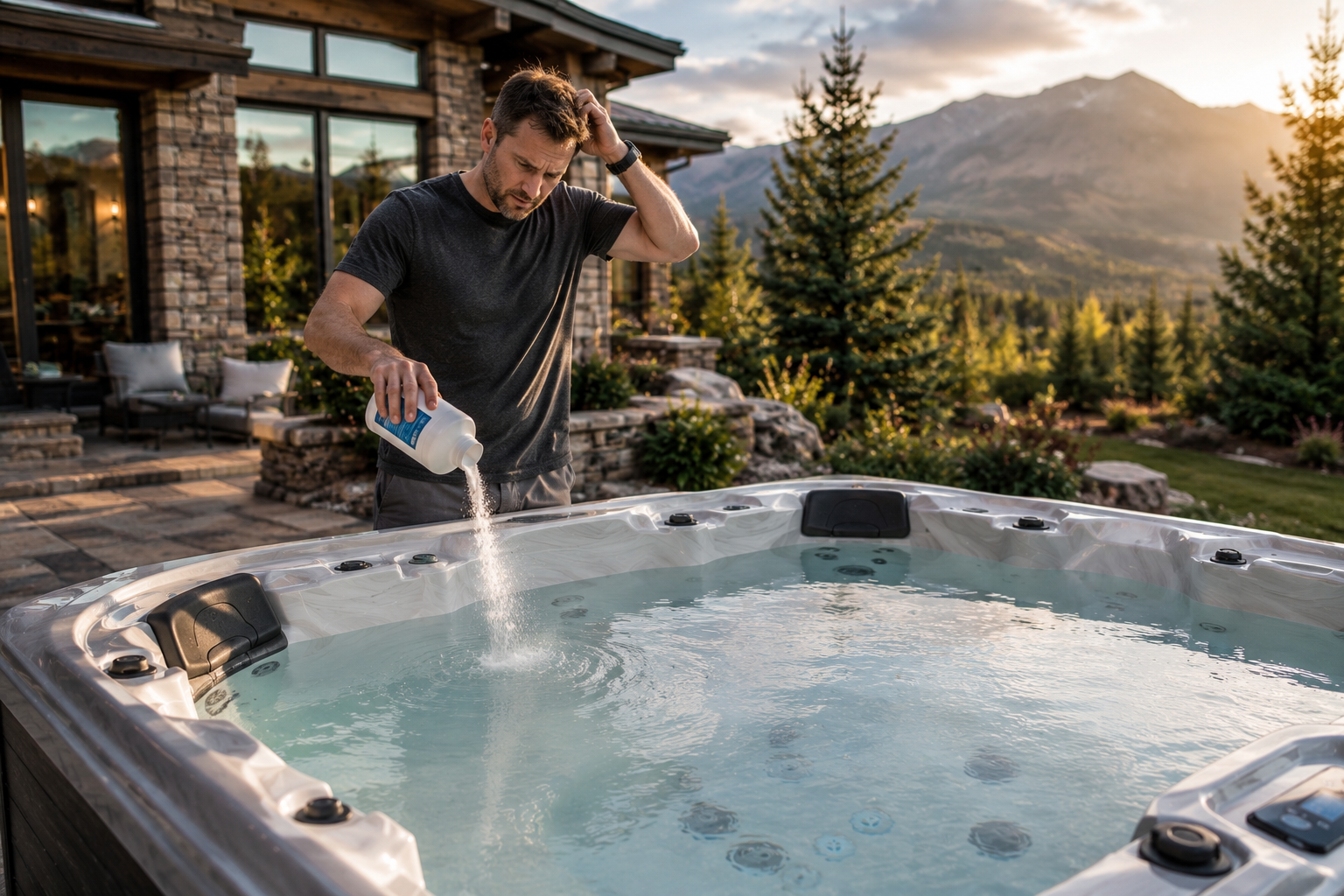
Why Do My Hot Tub Chemicals Stop Working?
Understand how aging water and accumulated contaminants can make fresh chemicals seem ineffective.
Explore Guide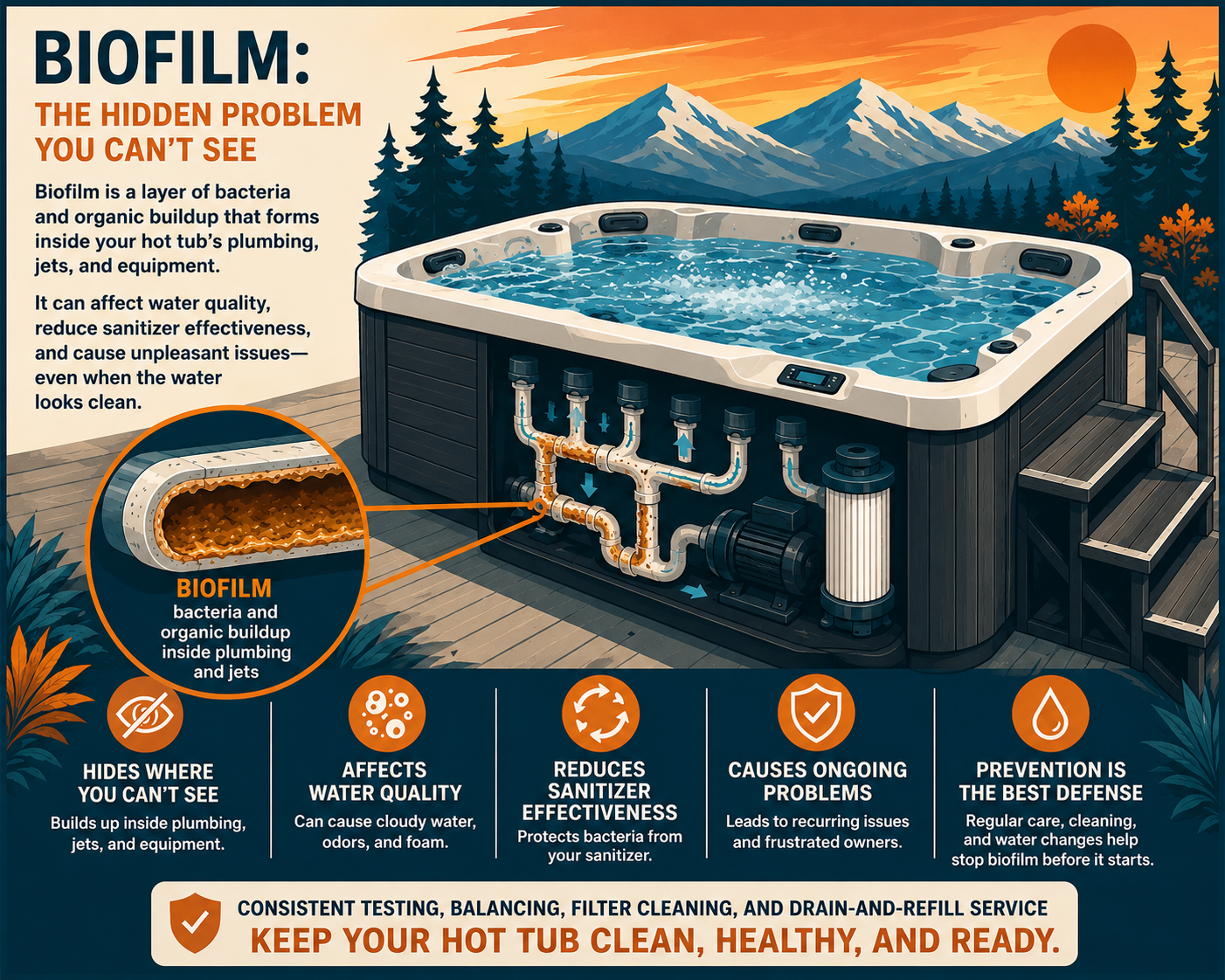
What Is Biofilm?
Learn how biofilm forms inside hot tub plumbing and why it matters even when the water appears perfectly clear.
Explore Guide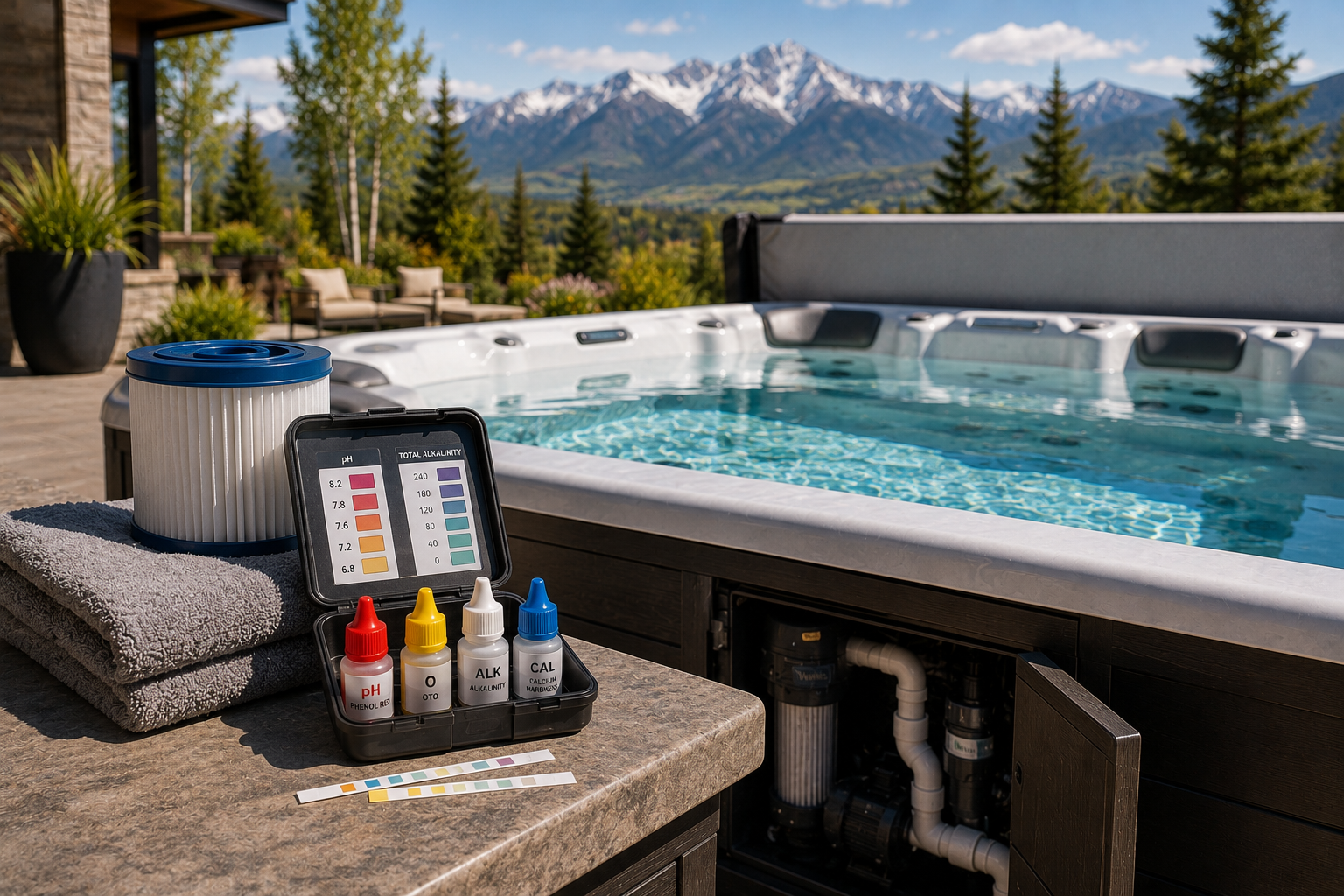
How Water Chemistry Protects Your Hot Tub
See how balanced water helps protect heaters, pumps, plumbing, seals, filters, and the complete spa system.
Explore Guide